Mæmorium: Designing a Way to Relive Life, Not Just Record It
We capture more than ever. Camera rolls that never end. Cloud storage that keeps expanding. Group chats full of proof that things happened. And still, most of what we actually care about gets lost in the noise.
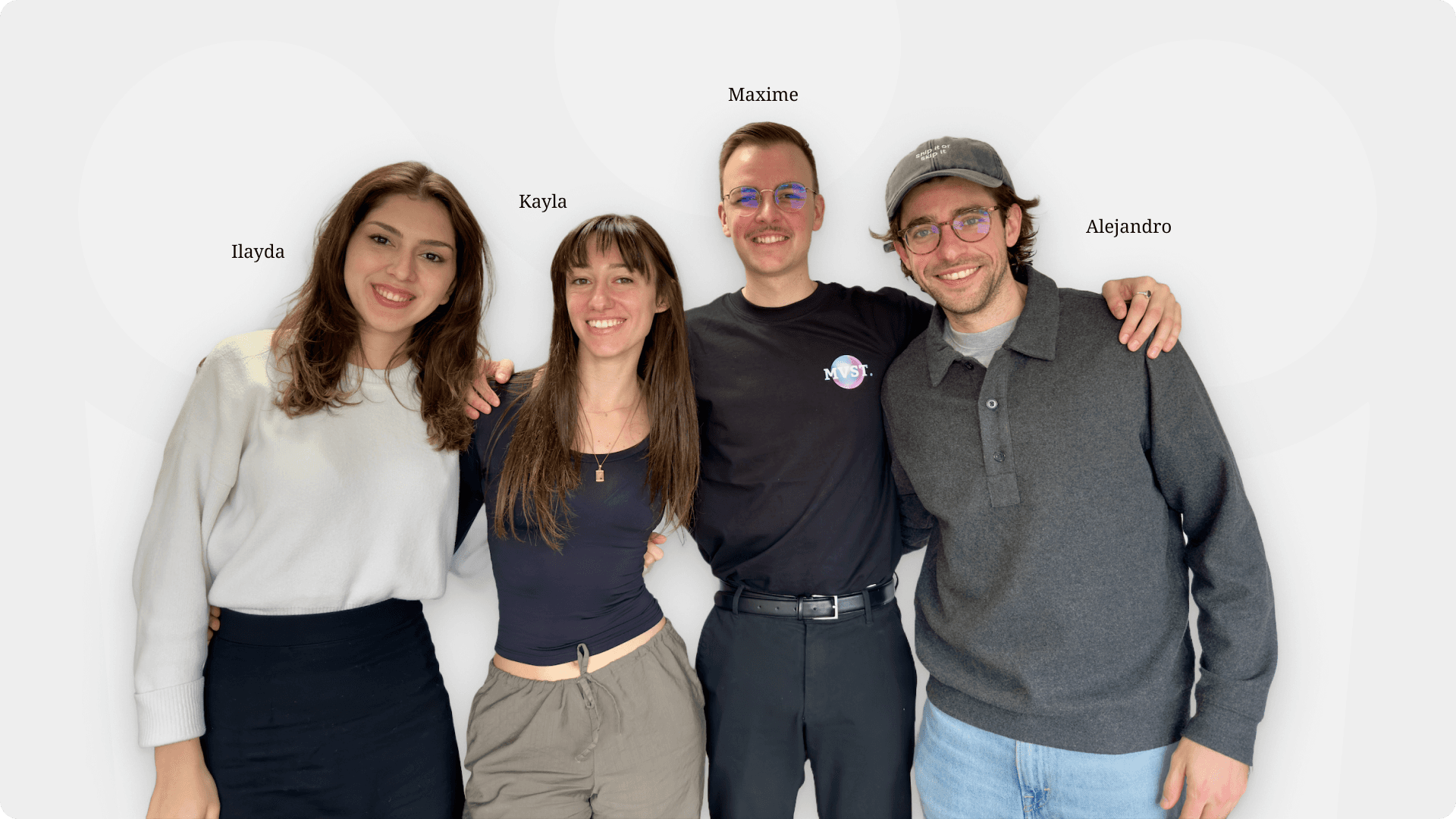
That tension became the brief for our Hackweek project in Barcelona. A small team, 32 hours, and a question worth sitting with: what if we only ever solved the first problem?
That's where Mæmorium started.
The thing modern recording tools get wrong
Recording tools are optimized for sharing, not for meaning. They're good at producing content and less good at preserving the feeling of being there. Most of the time, they ask you to interrupt the moment you're trying to keep.
The result is a paradox: we have more recorded evidence of our lives than any previous generation, and less ability to actually revisit what mattered. The insight we kept coming back to: memory is not a file. You don't retrieve it. You return to it. Nothing in the current landscape of consumer recording products is designed around that distinction.
Retroactive capture changes everything
The concept that unlocked the product was retroactive capture.
Most recording starts too late. You notice something is worth keeping after it's already happening. By the time you get your phone out, the moment has changed. You're filming yourself noticing something, not the thing itself.
Mæmorium inverts this. You're not filming. You're living. Something meaningful happens. You press a button. The system saves the last X minutes.
That single interaction changes the relationship between humans and recording. You stay present first. You choose preservation second.
From there, the rest of the product becomes a question of organization, access, and permission. What stays private. What becomes part of a shared archive. What gets passed forward. That's where Mæmorium stops being a media app and becomes something closer to a personal memory vault.
What we actually built
We built four core surfaces using a VisionOS-style interface, which let us design toward the spatial computing future without having to solve the hardware problem yet.
Home is not a feed. It's an entry point into your archive, with a featured memory and recent memories beneath it. That arrangement encodes the point of the product: a memory is a doorway, not content.
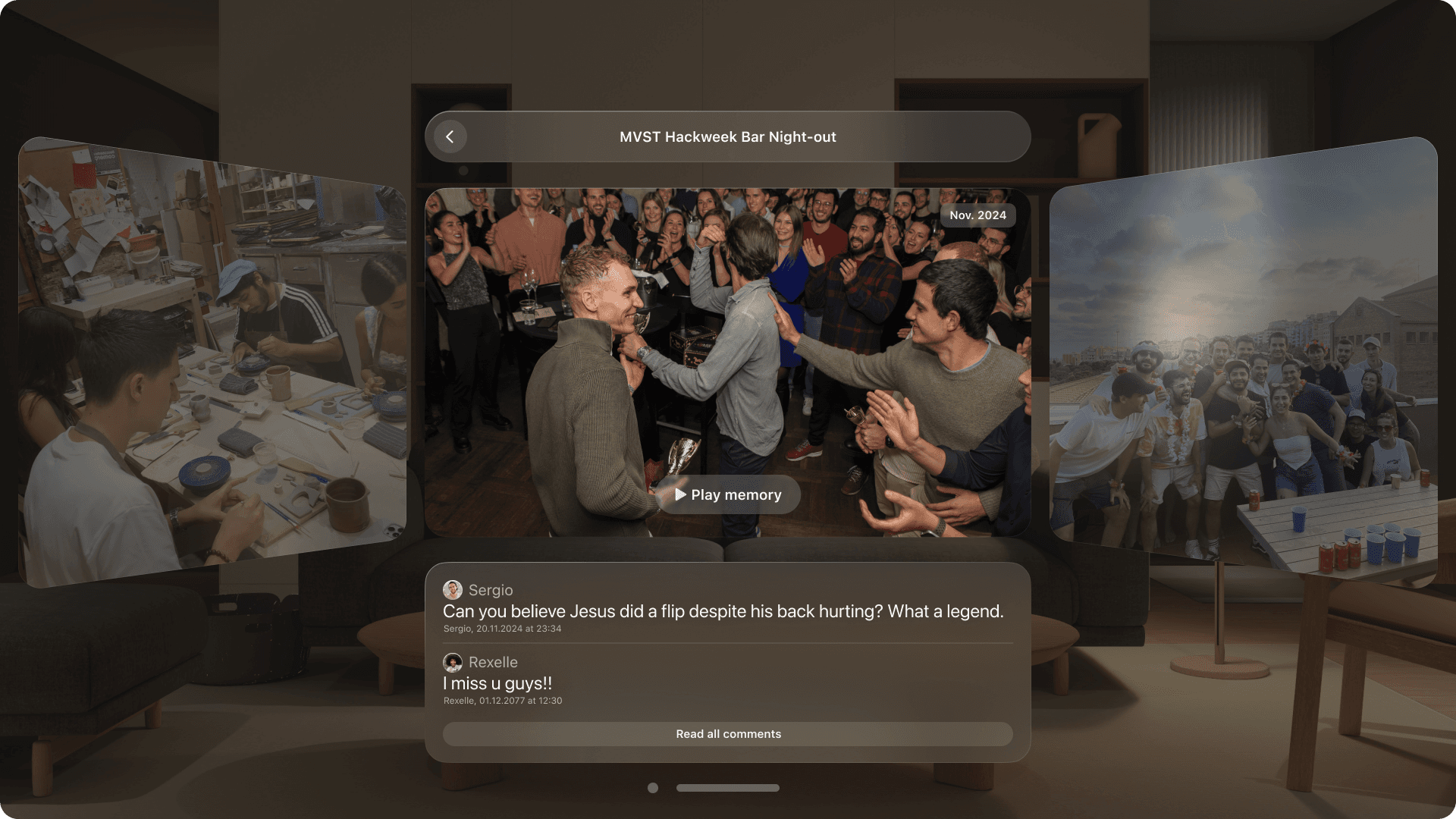
Timeline supports different time scales so you can move through day, month, and year. Real remembering is rarely a precise search query. It's usually a vague impulse: that week, that winter, that phase. A timeline that lets you zoom through time honors how memory actually works.
People lets faces act as entry points into clusters of memories. If you ask someone to recall a moment, they rarely start with a date. They start with a person. The permission model matters here: memories can be linked to people for navigation without automatically being shared. Connected and accessible are meaningfully different things, and the product treats them that way.
Playback is designed to feel like a return. A memory should open with context: when it happened, who was there, and a lightweight layer for co-memory, because other people hold details you forgot, and sometimes a single line can resurrect an entire atmosphere.
The demo that closed the loop
The most satisfying part of the project was that we didn't just talk about a memory machine. We used Hackweek itself to create one.
Throughout the 32 hours, I recorded small fragments as we went. Not staged highlights, but real moments: heads down building, little reactions when something clicked, celebrating at the bar afterward. When it came time to present, we introduced the concept and then delivered a memory from the very week we had just lived. We invited people to put on the Vision Pro and relive that recap.
You were not being told what Mæmorium could be. You were stepping into it.
The company voted. Mæmorium won Hackweek 2024.
The bets I'd validate first
The concept rests on real assumptions, and I'd want to test them before building further.
The most important one: retroactive capture actually changes recording behavior. If you can save the last X minutes, the hypothesis is that you stop performing for the camera and start living. The result should be more moments worth keeping, not more content. That behavioral shift is the whole product, and if it doesn't hold, the rest doesn't matter.
From there, the next question is whether immersive playback increases revisit rate. If memories feel like experiences rather than files, do people actually return to them more often and with more emotional resonance than they do in a camera roll? And does people-based navigation outperform folder-based organization, both for finding what you want and for rediscovering what you'd forgotten?
The last one is structural: privacy-first defaults have to build enough trust that people treat this as a permanent archive, not another app they'll abandon. A memory product lives and dies by that.
Where this is pointing
Mæmorium begins as a personal vault for moments you choose to keep. Over time, it becomes something closer to a heritage layer: not a public timeline, but a private lineage. The memories you choose become a living archive that can be shared with family on your terms, shaped over years, and revisited across generations.
The bet is not that VR headsets are everywhere tomorrow. The bet is that immersive capture gets smaller, lighter, and more ambient over time. When capture becomes frictionless, the software layer becomes the real product. You stop designing a gallery and start designing an experience for returning.
In a world where media gets cheaper and more abundant every year, the scarce thing is meaning. Mæmorium is an attempt to build for that.
The question that started it all still holds: what happens to your most cherished memories?